
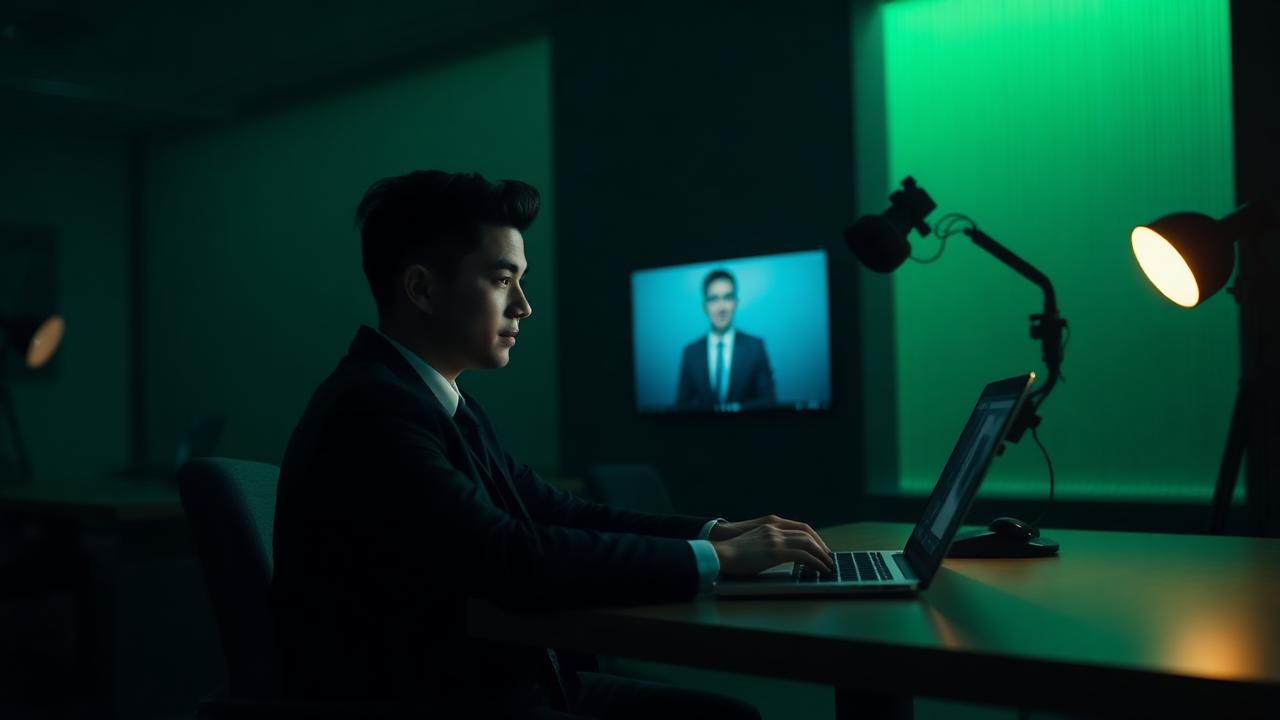
What is a HireVue interview and where does it sit in the process?
A HireVue is a recorded, asynchronous video interview. You receive a link after your online application and psychometric tests clear, and you usually have five to seven days to complete it. Questions appear on screen one at a time, you get a short preparation window, then the camera records your answer automatically until the timer runs out.
For most bulge bracket and elite boutique programmes, the HireVue sits between the online tests and the assessment centre or superday. It is a genuine cut: banks routinely use it to reduce a pool of several thousand applicants down to a few hundred who will speak to a human being.
| Element | Typical setting | What it means for you |
|---|---|---|
| Number of questions | 3 to 6 | Expect one motivation, one competency, one technical or market question |
| Preparation time | 30 seconds | Enough for a structure, not a script |
| Answer time | 2 to 3 minutes | Aim to finish at 80-90% of the limit |
| Retakes | 0 to 2 | Assume none, then treat any retake as a bonus |
| Deadline | 5 to 7 days | Submit at least 48 hours early to avoid platform issues |
How is a HireVue actually scored?
Two things happen. First, structured human review: a recruiter or analyst scores each answer against a competency rubric, usually on a one-to-five scale for content, structure, and communication. Second, platform-level signals such as completion, timing, and answer length. Where automated scoring is used, banks in the UK and EU must keep a human in the loop for rejection decisions, and most disclose this in their candidate notice.
| Dimension | Weak answer | Strong answer |
|---|---|---|
| Structure | Rambling chronology | Signposted: situation, action, result, learning |
| Specificity | "I worked in a team" | "I ran the £4,200 budget for a 12-person society" |
| Commercial awareness | Generic market chatter | One live deal or theme, with a view on why it matters |
| Motivation | "Banking is fast paced" | Product, desk and bank named, with a reason tied to your experience |
| Delivery | Reading a script off-screen | Eye contact with the lens, natural pace, no filler |
The nine HireVue questions banks ask most
- 1Why investment banking, and why this division?
- 2Why our bank specifically?
- 3Walk me through your CV in ninety seconds.
- 4Tell me about a time you worked under significant time pressure.
- 5Describe a time you had to influence someone without authority.
- 6Tell me about a mistake you made and what changed afterwards.
- 7Talk me through a deal or market story you have followed recently.
- 8What are your two greatest strengths and one development area?
- 9Where do you see yourself in five years?
Worked example: "Tell me about a time you worked under pressure"
Headline: "I led the financial close of a student consultancy project when a client moved the deadline forward by a week." Context: the team of five, the deliverable, the constraint. Action: what you personally re-planned, which task you dropped, how you split the work, what you escalated. Result: delivered two days early, client renewed for a second term. Learning: you now front-load the assumptions in any model so that a compressed timeline only costs you the formatting, not the analysis.
Technical and market questions to expect
- Walk me through the three financial statements and how they link.
- What happens to free cash flow if depreciation increases by 10?
- Which valuation method would you use for a high-growth, loss-making software business, and why?
- Name a deal in the last six months you found interesting and explain the strategic rationale.
- What is one macro theme that will shape M&A volumes over the next year?
You do not need to be an expert. You need one clean, correct answer per topic delivered calmly. A candidate who explains a DCF in plain English scores higher than one who lists jargon they cannot defend.
Setup: the mechanical marks most candidates give away
| Factor | Do this | Avoid |
|---|---|---|
| Camera | Lens at eye level, look at the lens not your image | Laptop on your lap, up-the-nose angle |
| Light | Main light source in front of you | A bright window behind you |
| Sound | Quiet room, wired earphones with mic | Kitchen, echo, notifications on |
| Background | Plain wall, tidy | Bed, posters, people walking past |
| Dress | Full business dress on top and bottom | Shirt over gym shorts, in case you stand up |
| Connection | Wired or strong Wi-Fi, browser only | Streaming or downloads in the background |
A seven-day HireVue preparation plan
- 1Day 1: write your CV walkthrough and rehearse it to 90 seconds.
- 2Day 2: build six competency stories mapped to the bank's published values.
- 3Day 3: prepare your "why this bank" answer using its recent deals, not its website copy.
- 4Day 4: drill ten technical fundamentals out loud.
- 5Day 5: record three full mock answers on your phone and watch them back at 1.5x.
- 6Day 6: cut every filler word you spotted and re-record.
- 7Day 7: complete the real thing in the morning, when you are sharpest.
“The candidates who pass HireVue are almost never the most impressive on paper. They are the ones who have already answered the question out loud, twenty times, into a lens.”
Why the first thirty seconds decide the score
Reviewers watch a very large number of these recordings in a single sitting, often in batches of forty or fifty, and they form an impression long before your final sentence. That is not laziness on their part; it is what happens to anyone assessing the same three questions repeatedly. The practical consequence for you is that the opening of each answer carries far more weight than the middle. If your first two sentences name the situation and the outcome, the reviewer relaxes into listening. If they open with hedging, throat-clearing or a wandering preamble about how much you admire the firm, the reviewer starts scoring downward and spends the rest of the clip looking for confirmation.
The fix is mechanical rather than creative. Write the first sentence of each of your core answers out in full and memorise only that sentence. Everything after it can be improvised from bullet points, because by then you are moving and the nerves have burned off. Candidates who try to memorise a whole answer sound like they are reciting, and that reads worse than an imperfect but genuine delivery.
What a strong answer actually sounds like
Consider the standard prompt: tell us about a time you worked under pressure. A weak answer begins with background, explains who else was involved, drifts into what the team did collectively, and arrives at a result with fifteen seconds left. A strong answer inverts that order. It opens with the pressure and the stake, states what you personally decided, describes the one action that mattered, and closes with a number. It sounds almost blunt when you first practise it, and that bluntness is exactly what scores well against a competency rubric.
The same inversion works for technical prompts. If you are asked how you would value a company, do not walk through every method you have ever read about. Name the two you would actually use, say why they fit that company, then give the one caveat a real analyst would raise. Depth on two points beats a shallow tour of six, and it signals that you have thought about the work rather than revised for the test.
Common mistakes that cost marks
Most failed recordings share a small number of avoidable faults, and none of them are about intelligence. Poor lighting from a window behind you turns your face into a silhouette. A cluttered background pulls attention away from what you are saying. Looking at your own image on screen instead of the lens makes you appear to be avoiding eye contact for the whole clip. Answering the question you prepared rather than the one asked is the single most expensive error, because a competency reviewer marks against the specific behaviour named in the prompt and cannot award credit for a good story about something else.
- Filming in a room with an echo, which makes even a good answer tiring to listen to.
- Using the same example for three different competencies, which reads as a thin experience base.
- Speaking in the plural throughout, so the reviewer never learns what you did.
- Running out of time mid-sentence, which loses the structure mark entirely.
- Leaving the recording until the final evening, when platform and upload problems are least recoverable.
Key takeaways
| Point | Detail |
|---|---|
| Practise on camera | Reading a script is visible on video; rehearsed structure is not |
| Answer the asked question | Reviewers score against the competency, not your best story |
| Quantify everything | Numbers are the cheapest credibility signal you have |
| Finish early | 80-90% of the timer reads as controlled, not rushed |
| Submit ahead of the deadline | Platform and upload failures are not usually appealable |
Frequently asked questions
How long should a HireVue answer be?
Aim for 90 seconds to two minutes on a two-minute limit. Finishing slightly early signals control; running out mid-sentence costs marks for structure.
Can you use notes in a HireVue interview?
A single prompt card with bullet keywords is fine and invisible if it sits just behind your webcam. Reading full sentences is obvious on camera and scores badly.
Do banks use AI to score HireVue interviews?
Some use automated signals to support review, but rejection decisions at major banks keep a human reviewer in the loop, and candidate notices generally disclose this.